Self Storage vs POD Containers: Cost and Convenience Guide |
| SELF STORAGE VS POD CONTAINERS: COST AND CONVENIENCE BREAKDOWN
⏱ 10 min read ·
📄 #1,988 words
Compare self storage units to portable storage containers. See real costs, hidden fees, and which option saves money for Roaring Fork Valley residents.
|
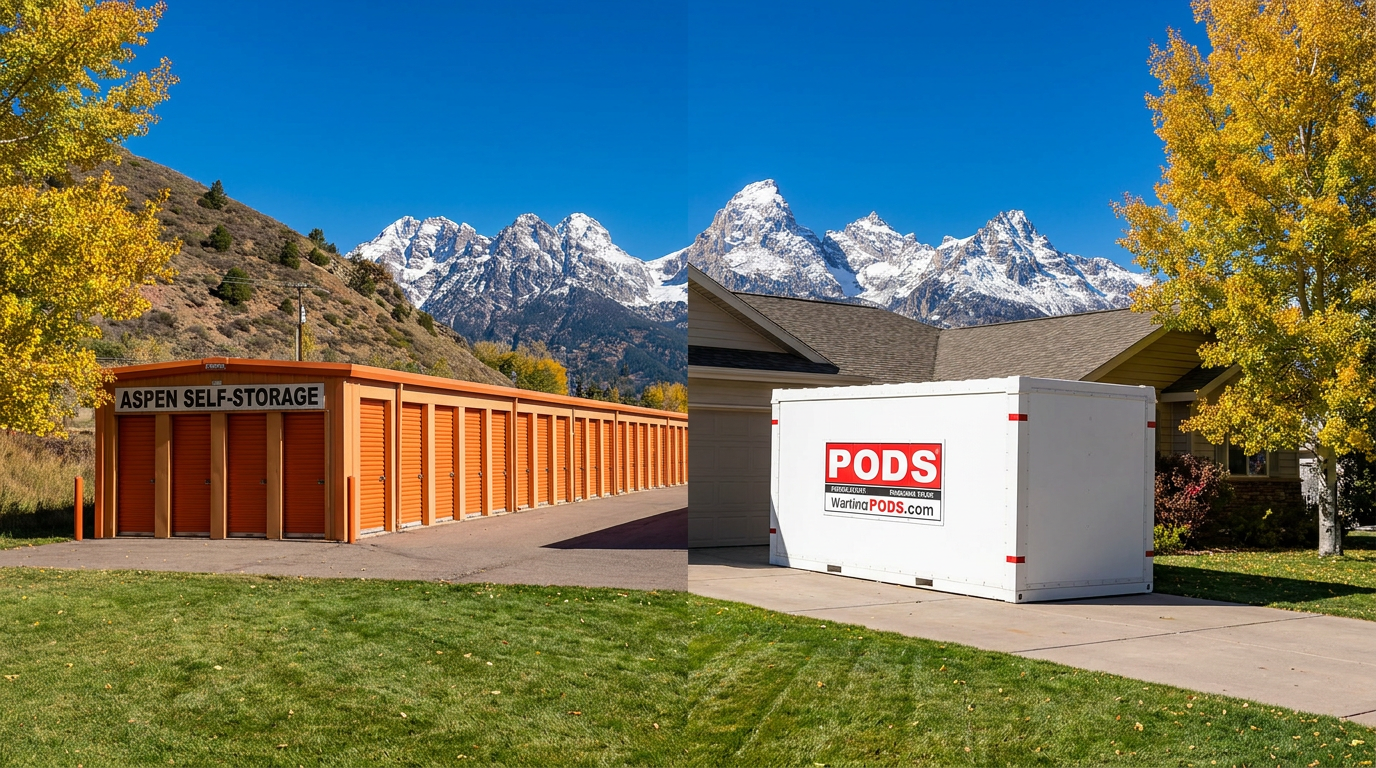
S elf storage units cost $100 to $300 per month with no delivery fees, while portable storage containers (PODS, 1-800-PACK-RAT, U-Pack) run $150 to $359 monthly plus $75 to $240 in delivery and pickup charges per trip. For storage lasting three months or longer without a move, self storage typically saves 20 to 40 percent compared to portable containers.
| Key Points: | |
|---|---|
| • | Self storage averages $107 to $133 per month for 10x10 to 10x15 units according to the 2020 Self-Storage Almanac |
| • | PODS containers cost $149 to $359 monthly, plus $75 to $150 per delivery or pickup trip |
| • | Total portable container costs for a typical move with storage reach $2,610 to $5,000 |
| • | Self storage offers 24/7 access; portable containers at provider facilities often require appointments |
| • | Climate-controlled self storage protects sensitive items; most containers lack temperature regulation |
Monthly Cost Comparison: Self Storage vs Portable Containers
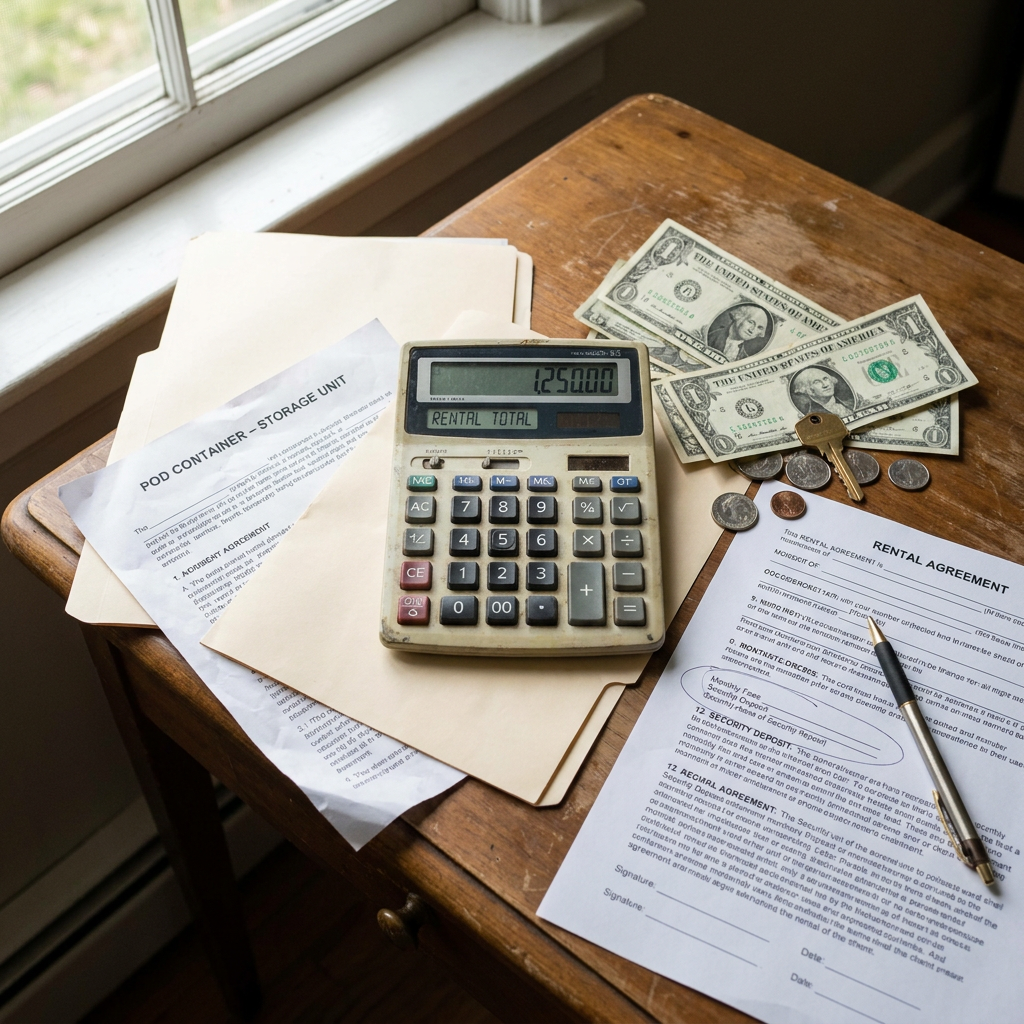
The base monthly rate tells only part of the story. Self storage facilities charge straightforward monthly rent with minimal additional fees. Portable container companies layer on delivery charges, transportation costs, and pickup fees that can double the effective monthly rate.
According to PODS pricing data, their containers range from $149 to $359 per month depending on size and location. Traditional self storage units in comparable sizes cost $100 to $200 monthly at most facilities, with premium climate-controlled options reaching $250 to $450 in high-cost markets like Aspen.
| Storage Type | Monthly Cost | Delivery/Pickup Fees | 6-Month Total |
|---|---|---|---|
| Self Storage (10x10) | $107 to $150 | $0 | $642 to $900 |
| PODS (12-foot) | $149 to $249 | $150 to $300 (2 trips) | $1,044 to $1,794 |
| 1-800-PACK-RAT (12-foot) | $139 to $229 | $160 to $320 (2 trips) | $994 to $1,694 |
| Climate-Controlled Unit (10x15) | $133 to $200 | $0 | $798 to $1,200 |
Hidden Fees That Change the Real Price
Portable container companies structure pricing around multiple touchpoints. Each time the container moves, you pay. A typical scenario involves four separate fees: initial delivery to your home, transport to the storage facility, delivery to your new address, and final pickup. At $75 to $150 per trip, these charges add $300 to $600 to your total.
Self storage facilities charge simpler fees. Expect a one-time administrative fee of $15 to $30, a lock purchase of $10 to $20, and optional tenant protection at $10 to $15 monthly. These additions rarely exceed $50 for the entire rental period. Our storage FAQ covers what to expect when renting your first unit.
Rate Increases Over Time
Large self storage chains like Public Storage, Extra Space Storage, and CubeSmart often use promotional pricing that increases after 3 to 6 months. According to industry data, rate increases of 8 to 15 percent are common after the introductory period ends. Locally owned facilities typically offer more stable pricing without aggressive rate hikes.
Container companies also adjust rates, though less frequently. Some customers report price increases when extending rentals beyond initial quotes. Reading the full contract terms before signing prevents surprises.
Access and Convenience: The Critical Difference
Self storage wins decisively on access frequency. Most facilities offer 24/7 gate access with individual unit codes. You can retrieve items at 6 AM before a ski trip or drop off gear at 10 PM after work. Drive-up units let you back your vehicle directly to the door, eliminating long carries through hallways.
Portable containers at provider facilities work differently. When stored at a PODS or 1-800-PACK-RAT yard, you typically cannot access your belongings freely. Some companies allow scheduled access by appointment during business hours. Others require the container to be redelivered to your location, triggering another $75 to $150 fee.
Loading Convenience Comparison
Containers shine for one specific use case: loading at your own pace. The container sits in your driveway for up to 30 days while you pack gradually. No rental truck deadline pressure. No multiple trips to a facility.
Self storage requires you to transport items yourself or hire movers. For a two-bedroom apartment, expect 2 to 4 truck trips depending on vehicle size. A 10-foot U-Haul rental costs $20 to $40 per day plus $0.79 to $0.99 per mile. Combined with self storage, this DIY approach still costs less than portable containers for most situations.
Security and Climate Protection
Security infrastructure varies dramatically between options. Traditional self storage facilities invest in perimeter fencing, electronic gate access, digital video surveillance, LED lighting, and sometimes onsite management. Interior units add another security layer since thieves cannot directly access unit doors from outside the building.
A container in your driveway depends entirely on your property's security. Neighborhood crime rates, fencing, and lighting determine risk levels. When stored at a provider's facility, security measures vary widely. Some offer gated yards with cameras; others use basic fenced lots with minimal monitoring.
Climate Control Matters for Long-Term Storage
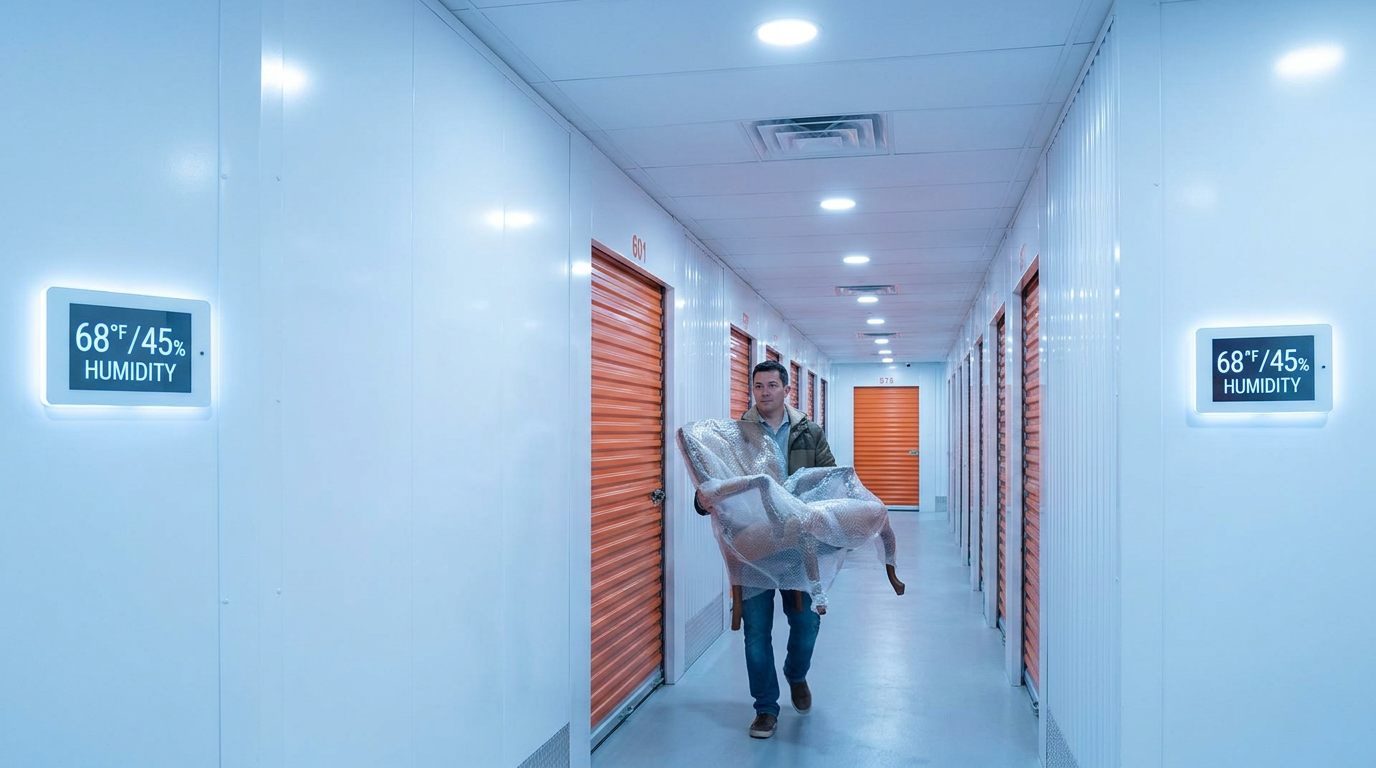
Self storage facilities offer climate-controlled units maintaining temperatures between 55 and 80 degrees Fahrenheit with humidity regulation. These conditions protect electronics, wooden furniture, leather goods, artwork, wine collections, and documents from damage.
Most portable containers lack climate control. They are weather-resistant steel boxes, not climate-regulated environments. In Colorado's Roaring Fork Valley, where temperatures swing from below zero in winter to above 90 degrees in summer, uncontrolled containers risk damaging sensitive items during extended storage. For guidance on protecting your belongings, review our tenant protection plans.
When Self Storage Makes More Financial Sense
Self storage delivers better value in these scenarios:
- Storage without moving: You need extra space but are not relocating. No delivery fees make self storage 30 to 50 percent cheaper.
- Duration exceeding 3 months: The longer you store, the more delivery and pickup fees inflate container costs.
- Frequent access needed: Contractors accessing tools weekly, retailers rotating seasonal inventory, or families retrieving camping gear regularly benefit from unlimited 24/7 access.
- Valuable or sensitive items: Climate control and facility security protect investments better than driveway containers.
- Property restrictions: HOA rules, steep driveways, or limited space prevent container placement at many Roaring Fork Valley homes.
For business storage needs, self storage offers flexibility that containers cannot match. Ski shops, restaurants, event companies, and contractors can access inventory and equipment whenever needed without scheduling appointments or paying redelivery fees.
When Portable Containers Justify the Extra Cost
Containers make sense for specific situations despite higher total costs:
- Combined moving and storage: Relocating from Aspen to Denver with a 2-month gap between closing dates? A container eliminates separate moving and storage logistics.
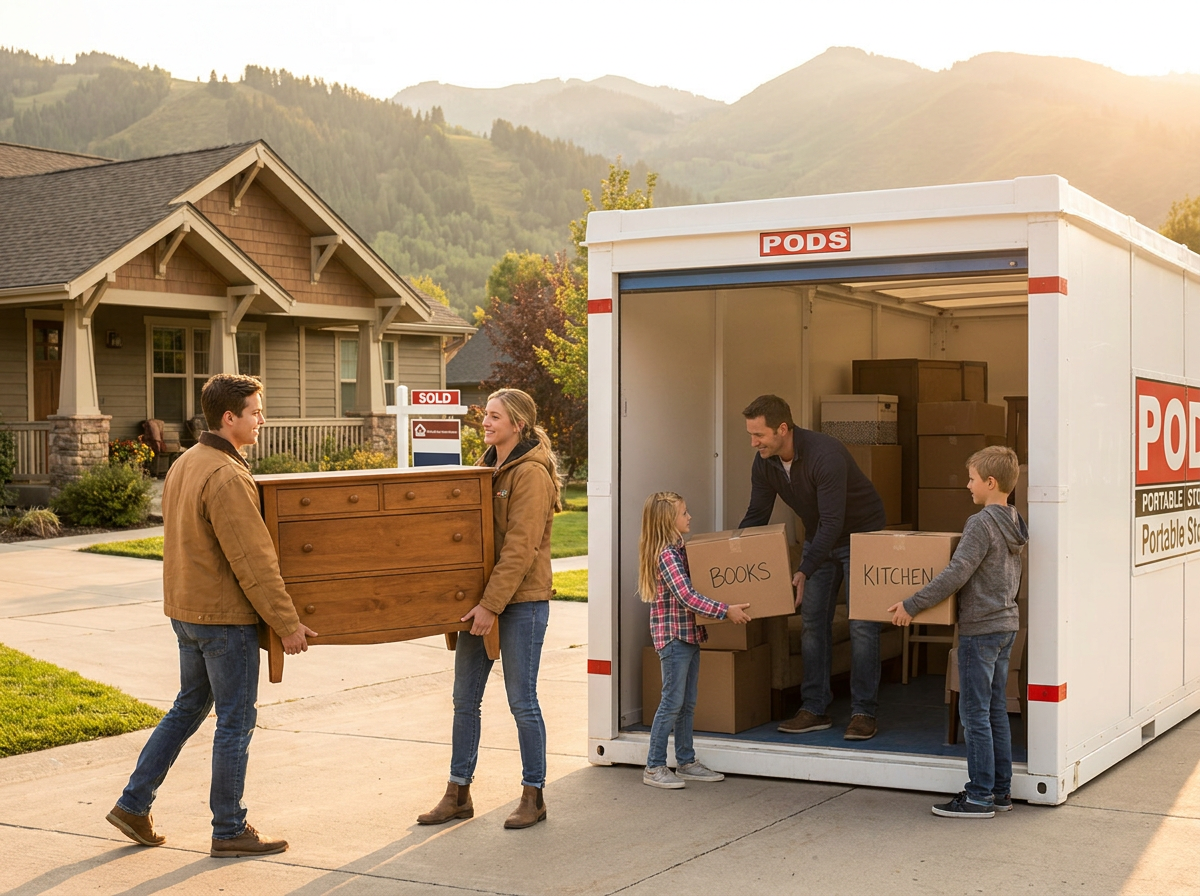
- Home staging for sale: Declutter into a driveway container, stage the home, then ship everything to your new address in one trip.
- Major renovations: Keep furniture on your property during kitchen or bathroom remodels, avoiding facility trips during the project.
- No truck driving: If you cannot or prefer not to drive a rental truck, containers handle transportation for you.
The convenience premium runs 40 to 80 percent higher than DIY self storage, according to Move.org's container company analysis. You are paying for door-to-door service, not just storage space.
Real-World Cost Scenarios
Scenario 1: Seasonal Gear Storage (6 Months)
Storing ski equipment, bikes, and camping gear from May through October. No move involved.
Self Storage (6x10 unit):
$95/month x 6 = $570 total
Portable Container:
$175/month x 6 + $150 delivery + $150 pickup = $1,350 total
Savings with self storage:
$780 (58% less)
Scenario 2: Home Sale with 3-Month Gap
Selling current home, buying new home 3 months later. Contents from a 3-bedroom house.
Self Storage + Rental Truck:
$200/month x 3 + $150 truck rental x 2 = $900 total
PODS (16-foot container):
$299/month x 3 + $150 delivery + $150 transport + $150 final delivery = $1,347 total
Savings with self storage:
$447 (33% less)
Scenario 3: Renovation Storage (2 Months, On-Site Access Needed)
Kitchen remodel requiring daily access to stored items.
Self Storage:
Requires 15-minute drive each way for access
Driveway Container:
$200/month x 2 + $150 delivery + $150 pickup = $700 total
Better choice:
Container wins for convenience despite higher cost
Roaring Fork Valley Considerations
Mountain communities present unique storage challenges. Many Aspen, Snowmass Village, and Woody Creek properties have steep driveways unsuitable for container delivery trucks. HOA restrictions in developments like Snowmass Club and Starwood prohibit driveway containers entirely.
Winter access adds another factor. Container companies may refuse deliveries during heavy snow periods or charge premium fees for mountain access. Self storage facilities on Highway 82 remain accessible year-round with plowed driveways and covered loading areas.
Learn how to save 15 to 30 percent on Aspen-area storage by choosing facilities just outside town limits. A 10-minute drive from downtown Aspen can reduce monthly costs significantly compared to in-town options.
Frequently Asked Questions
Are PODs cheaper than self storage?
No. For storage-only needs lasting more than one month, self storage costs 20 to 50 percent less than portable containers. The monthly rate difference is modest, but delivery and pickup fees of $150 to $300 total make containers more expensive. PODS only becomes cost-competitive when combining a long-distance move with storage, eliminating the need for separate moving services.
What are the downsides of using PODs?
Limited access tops the list. When stored at a provider facility, you cannot retrieve items freely. Scheduling access or paying for redelivery creates friction. Other downsides include lack of climate control, dependence on your property's security when stored at home, and delivery limitations in mountain areas with steep driveways or narrow roads.
What is the average cost of a pod storage container?
Monthly rates range from $149 to $359 depending on container size and location. A 12-foot PODS container averages $175 to $225 monthly. The 16-foot container runs $225 to $299 monthly. Add $75 to $150 for each delivery, pickup, or transport, bringing typical total costs to $400 to $600 for the first month including logistics fees.
How much should I pay for a 20-foot container?
Portable storage companies rarely offer 20-foot containers for residential use. PODS' largest option is 16 feet. For 20-foot shipping container rentals through companies like Dry Box, expect $150 to $250 monthly plus $200 to $400 for delivery. Purchasing a used 20-foot shipping container costs $2,500 to $4,500, which may prove more economical for storage needs exceeding 12 months.
Can I access my portable storage container anytime?
Only if stored on your property. Containers at provider facilities require scheduled appointments, typically during business hours. Some companies charge access fees of $25 to $50 per visit. Self storage facilities with 24/7 access let you retrieve items whenever needed without appointments or additional charges.
How do climate-controlled units compare to containers for long-term storage?
Climate-controlled self storage maintains consistent temperatures between 55 and 80 degrees Fahrenheit with humidity control. This environment protects wood furniture from cracking, prevents mold on fabrics, keeps electronics safe from condensation, and preserves documents from deterioration. Standard containers offer no climate regulation, exposing contents to temperature extremes that can cause significant damage over 6 to 12 months.
Making the Right Choice for Your Situation
The decision between self storage and portable containers comes down to your specific needs. For pure storage without a move, self storage costs less and offers better access. For relocations combining moving and storage into one solution, containers provide convenience worth the premium for some customers.
Consider these factors: storage duration, access frequency, item sensitivity, property restrictions, and total budget. Run the numbers for your specific scenario using the comparison framework above. Most Roaring Fork Valley residents find self storage delivers better value, especially for seasonal gear, business inventory, and long-term household storage.
Our storage unit size guide helps determine exactly how much space you need. From 5x5 lockers for ski equipment to 19x35 drive-up units for full household contents, matching the right unit size to your belongings prevents paying for unused space.
|