Self Storage Near Aspen for Skis, Bikes, and Seasonal Gear |
| SELF STORAGE NEAR SNOWMASS AND ASPEN FOR SKIS, BIKES, AND SEASONAL GEAR
⏱ 13 min read ·
📄 #2,545 words
Find secure self storage near Aspen and Snowmass for skis, bikes, and seasonal gear. Compare unit sizes, costs, and features for year-round gear storage.
|
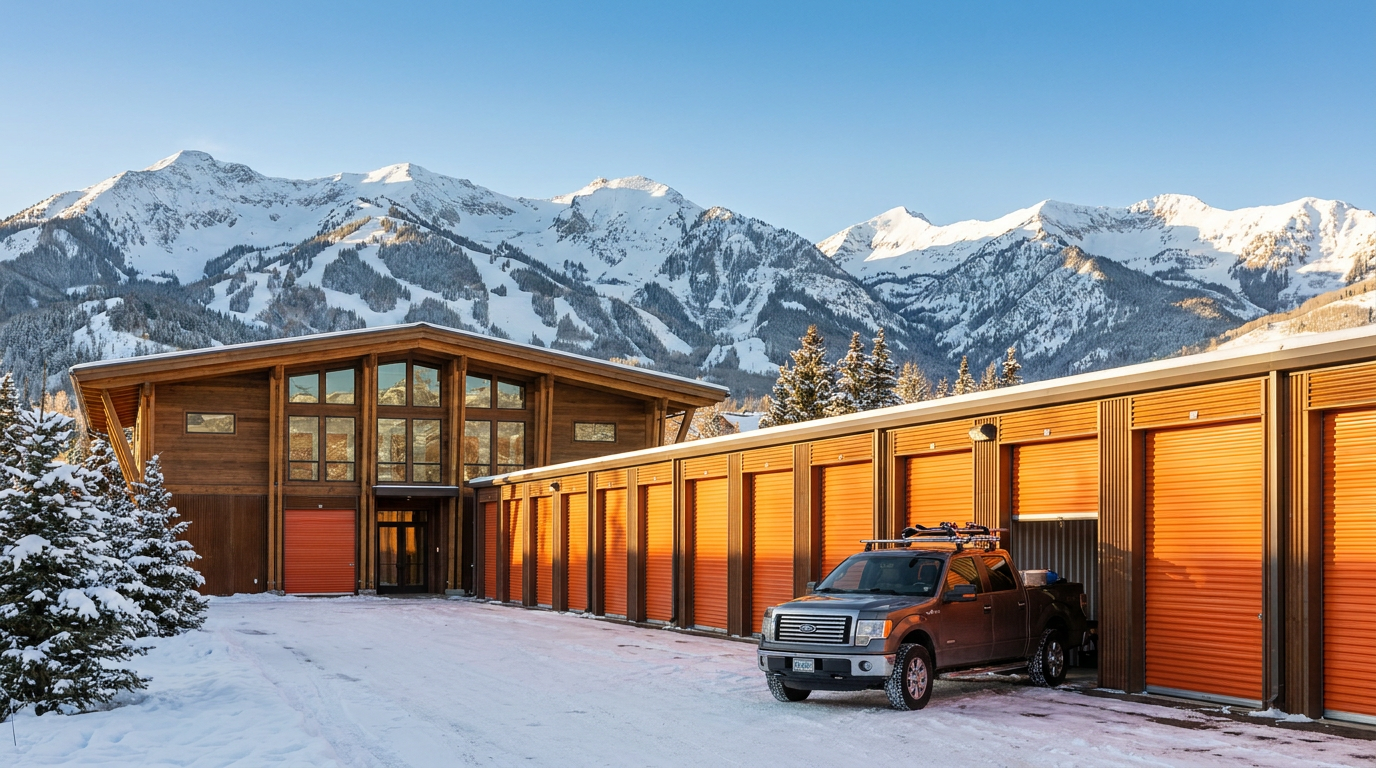
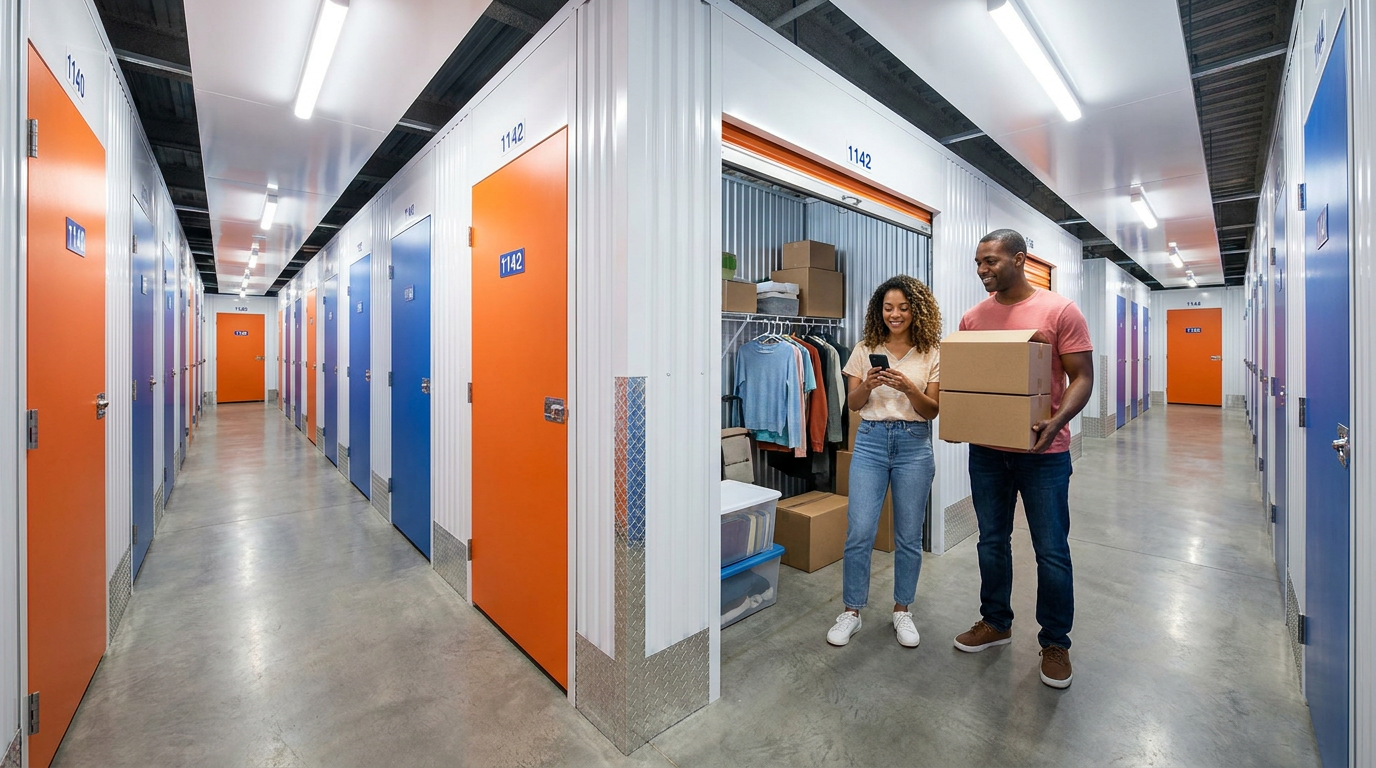
S elf storage near Aspen and Snowmass provides year-round protection for skis, bikes, and seasonal gear at costs 15 to 30 percent lower than in-town Aspen facilities. A 5x5 locker holds 2 to 4 pairs of skis plus boots and bins, while a 10x10 unit accommodates a family's complete winter and summer gear collection. Facilities along Highway 82 offer 24/7 access, drive-up loading, and security features essential for protecting high-value outdoor equipment.
| Key Points: | |
|---|---|
| • | Storage units range from $135/month for a 6x5 locker to $1,350/month for a 12x22 drive-up unit with power |
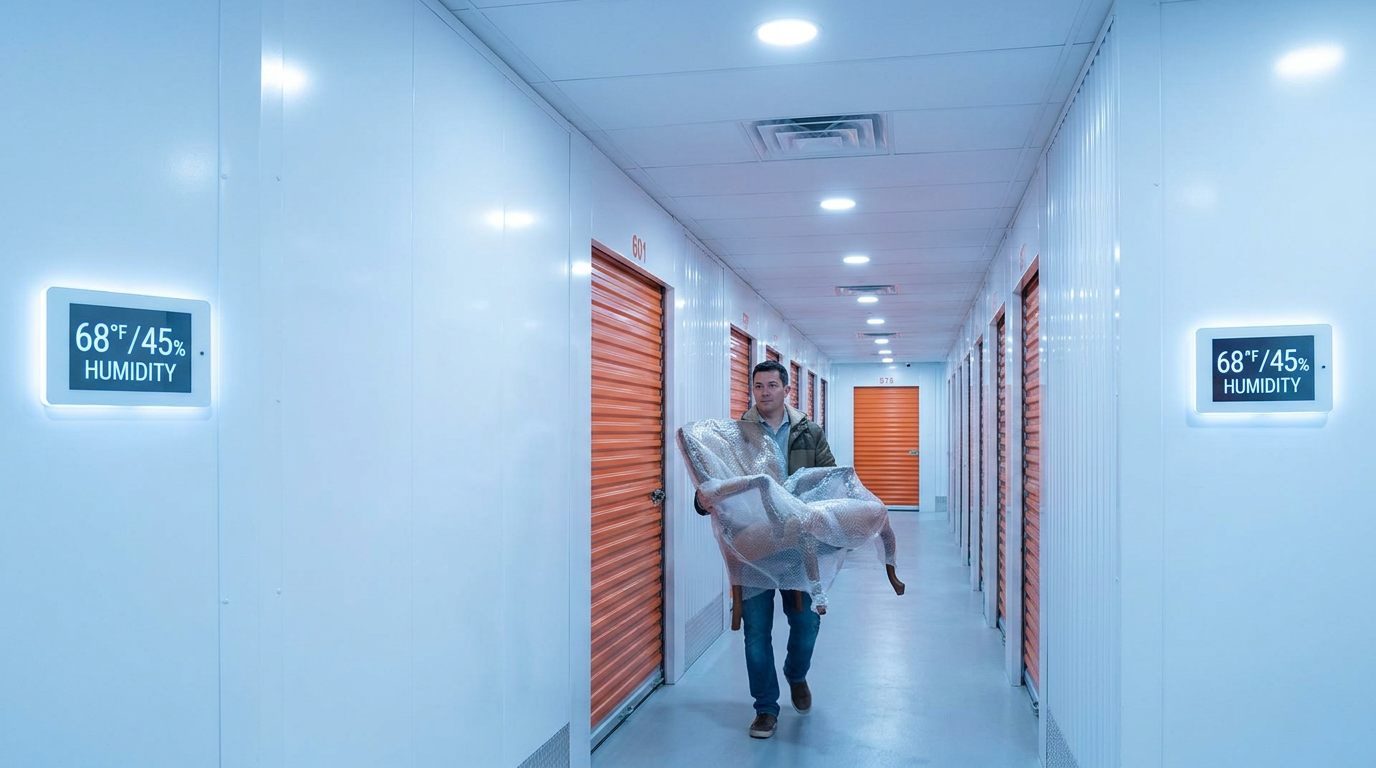
| • | Interior units maintain stable temperatures between 40 and 70 degrees Fahrenheit, protecting ski bases and bike components |
| • | 24/7 access allows early morning gear pickup for powder days or dawn bike rides |
| • | Month-to-month leases with no deposit required provide flexibility for seasonal residents |
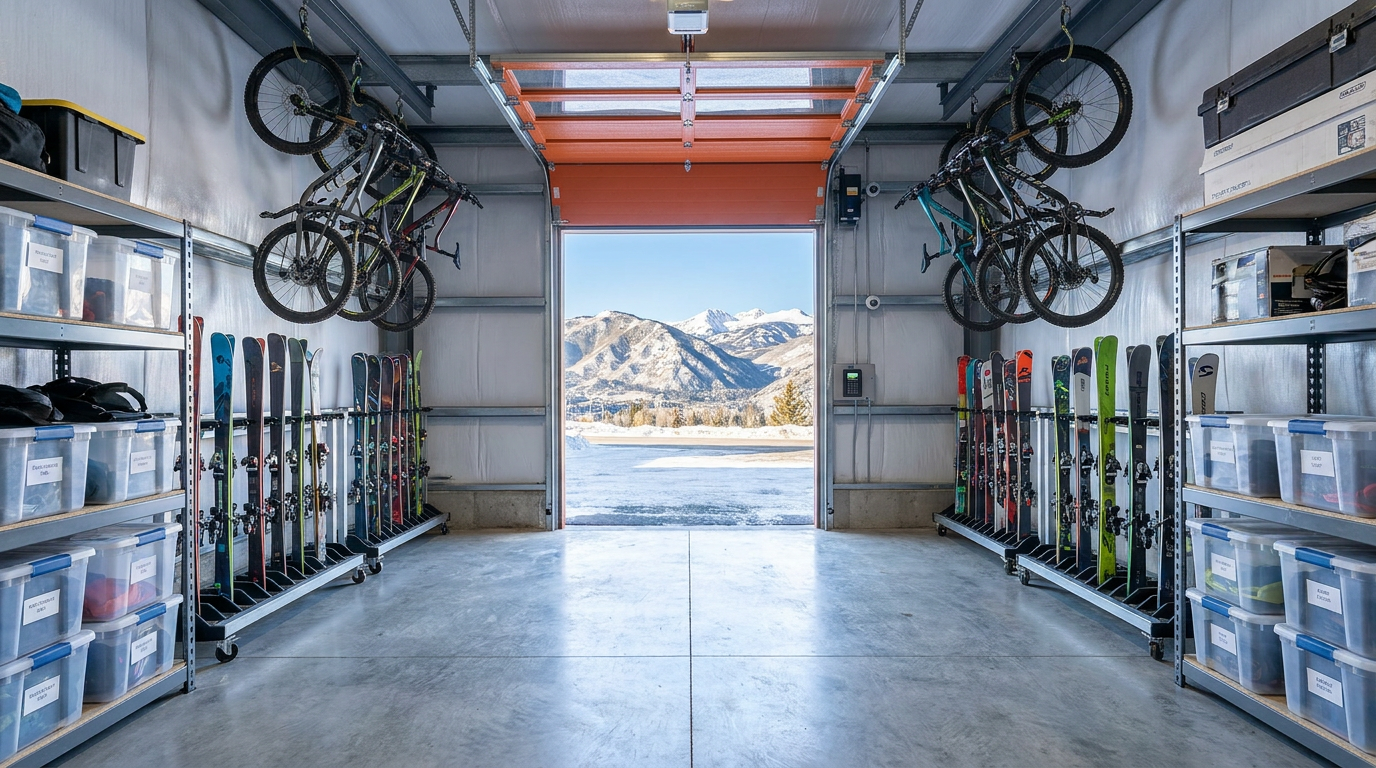
| • | Drive-up units accommodate roof boxes, bike racks, SUPs, and multiple bikes without size restrictions |
Why Roaring Fork Valley Residents Need Dedicated Gear Storage
The average multi-sport household in the Aspen and Snowmass area owns 4 to 8 pairs of skis, 2 to 4 snowboards, 3 to 6 bikes, and additional gear including roof boxes, camping equipment, and water sports accessories. According to the Aspen Chamber of Commerce business directory, storage demand in the valley has grown significantly as property sizes decrease and gear collections expand.
Condominiums and townhomes in Snowmass Village, Aspen, and Basalt typically provide 20 to 40 square feet of closet space for gear storage. A single pair of skis with poles requires approximately 2 square feet of floor space when stored vertically. Four bikes hung on wall mounts need 16 to 24 square feet of wall space plus floor clearance.
HOA restrictions in many Roaring Fork Valley communities prohibit gear storage on balconies, in hallways, or in carports. Landlords increasingly include clauses limiting garage use for vehicle parking only. These constraints push residents toward external storage solutions.
The True Cost of Improper Gear Storage
High-end skis from brands like Volkl, Blizzard, and Black Crows cost $800 to $1,500 per pair. Custom touring setups with Dynafit or Marker bindings reach $2,000 to $3,000. Carbon mountain bikes from Santa Cruz, Yeti, or Pivot range from $5,000 to $12,000. E-bikes commonly exceed $8,000.
Storing skis in uncontrolled environments causes base oxidation, edge rust, and binding corrosion within 6 to 12 months. Bikes stored in damp garages develop drivetrain rust, cable corrosion, and brake contamination. The repair costs for neglected gear often exceed $200 to $500 per item annually.
Self Storage vs. Resort Seasonal Lockers: A Direct Comparison
The Aspen Snowmass seasonal locker rental program provides convenient on-mountain storage during ski season. These lockers serve a specific purpose but differ significantly from year-round self storage facilities in capacity, access, and cost structure.
| Feature | Resort Seasonal Lockers | Self Storage Facility |
|---|---|---|
| Typical Size | 2 to 4 cubic feet | 25 to 665 square feet |
| Availability | Ski season only (November to April) | Year-round, 24/7 access |
| Capacity | 1 to 2 pairs of skis and boots | Unlimited based on unit size |
| Summer Gear Storage | Not available | Bikes, SUPs, camping gear included |
| Vehicle/Trailer Storage | Not available | Open parking from $275/month |
| Access Hours | Lift operation hours only | 24 hours, 7 days per week |
| Multi-Mountain Use | Single mountain location | Central Highway 82 access to all areas |
Resort lockers work well for daily convenience during ski season. Self storage serves multi-sport households who need year-round access to rotating gear collections. Many families use both: a resort locker for daily ski access and a self storage unit for their complete gear inventory.
Storage Unit Sizes for Skis, Bikes, and Seasonal Gear
Choosing the right unit size prevents overpaying for unused space while ensuring adequate room for safe gear organization. The storage unit size guide provides detailed dimensions for each option available at Snowmass Self Storage.
Compact Lockers: 5x5 to 6x5 (25 to 30 Square Feet)
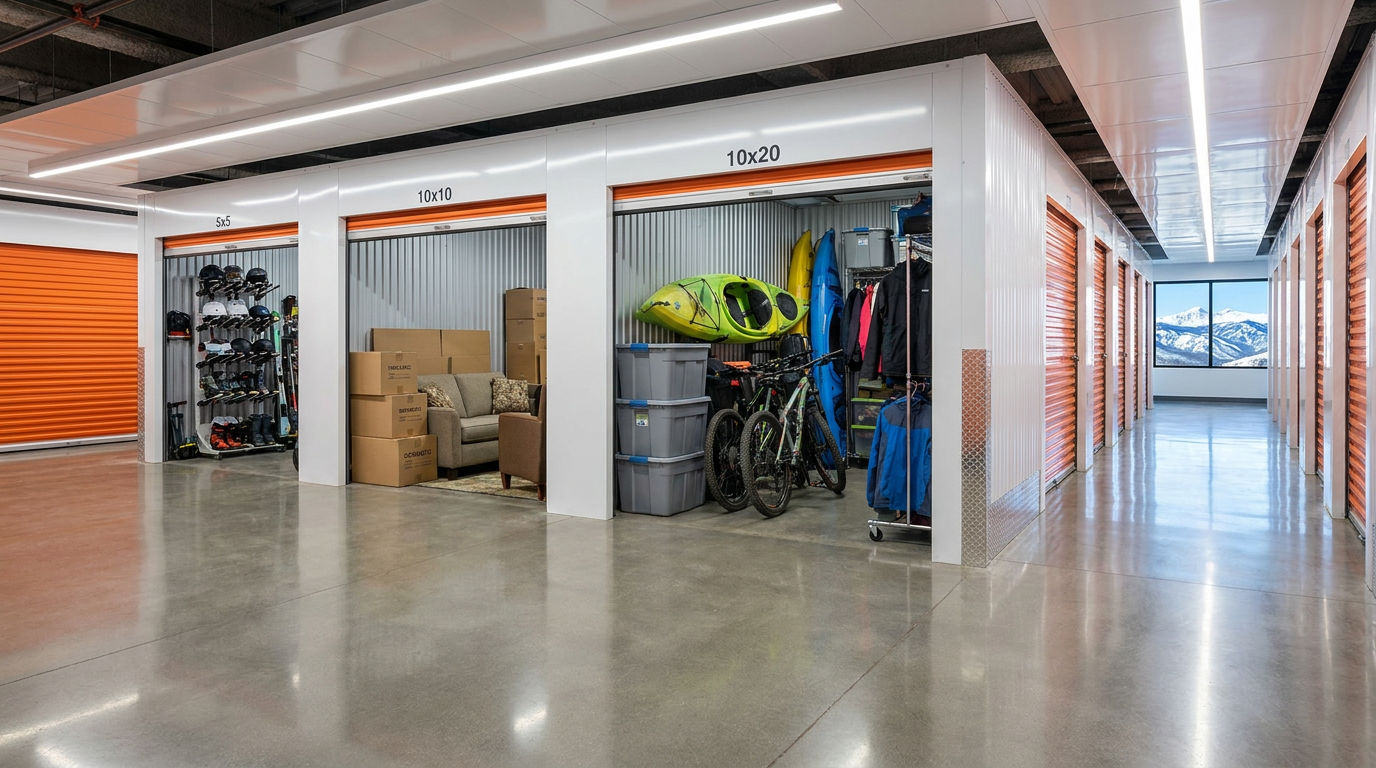
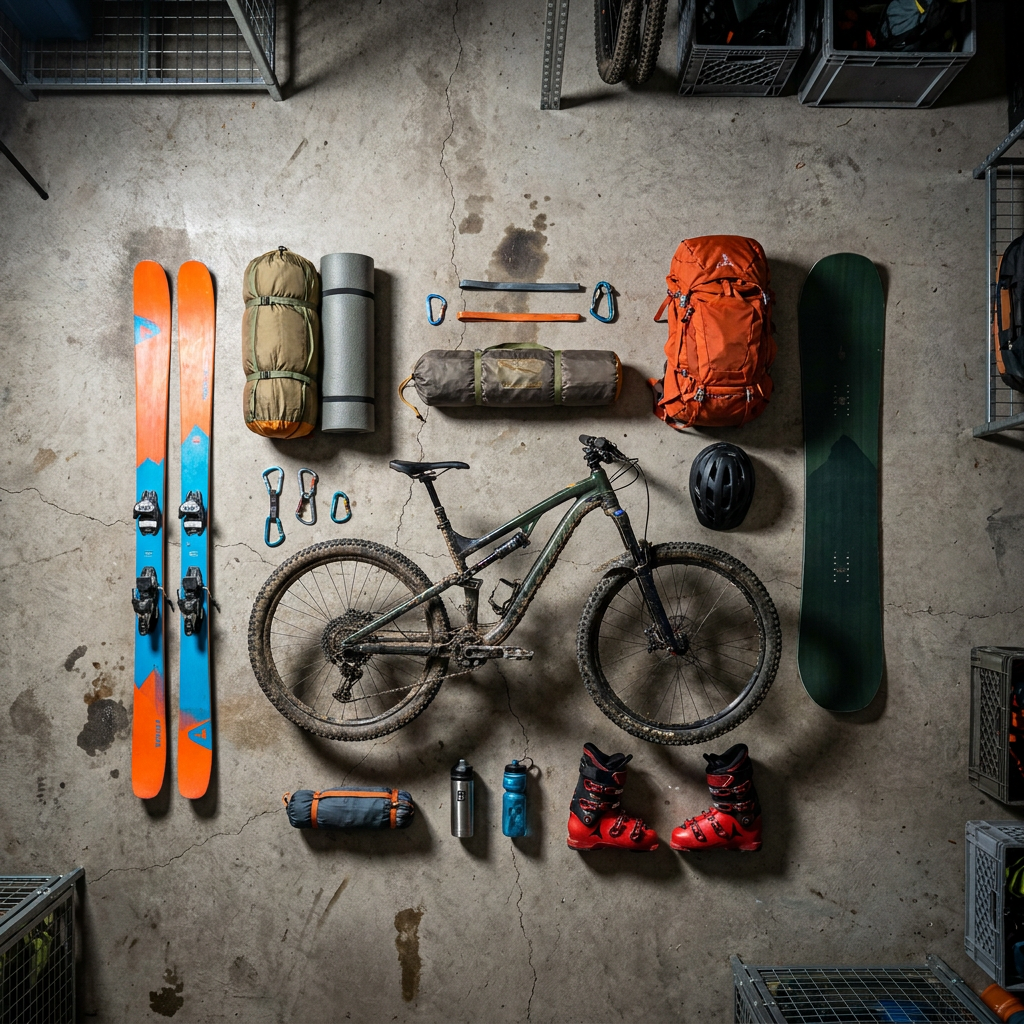
A 6x5 Sky Locker at $135 per month accommodates 2 to 4 pairs of skis stored vertically, 2 snowboards, 2 pairs of ski boots, and 3 to 4 storage bins for helmets, goggles, and accessories. This size suits individual skiers or couples with focused winter gear collections.
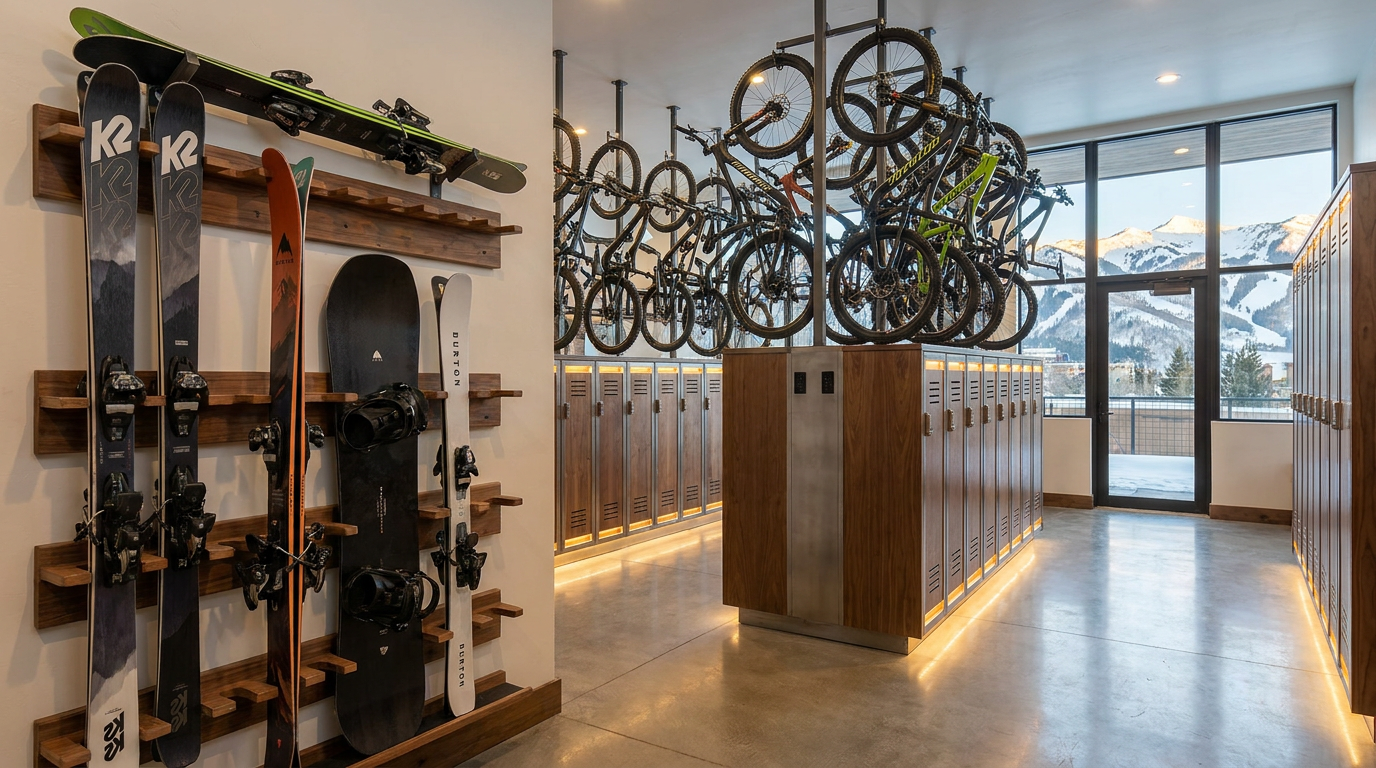
Vertical ski storage racks maximize floor space in compact units. Wall-mounted hooks hold poles, and stackable bins organize soft goods. A single road bike or folding bike fits alongside winter gear with careful arrangement.
Interior Units: 6x11 to 12x15 (66 to 180 Square Feet)
The 6x11 interior ground unit at $375 per month provides space for a family of four's ski gear plus 2 to 3 mountain bikes. Built-in lighting and power outlets enable organization work and battery charging. Ground-floor hallway access simplifies loading and unloading.
A 12x15 interior unit at $925 per month handles extensive gear collections: 8 to 12 pairs of skis, 4 to 6 bikes on wall mounts, a roof box, camping equipment, and seasonal clothing storage. This size serves multi-sport families or shared storage arrangements between households.
Drive-Up Units: 12x22 to 19x35 (264 to 665 Square Feet)
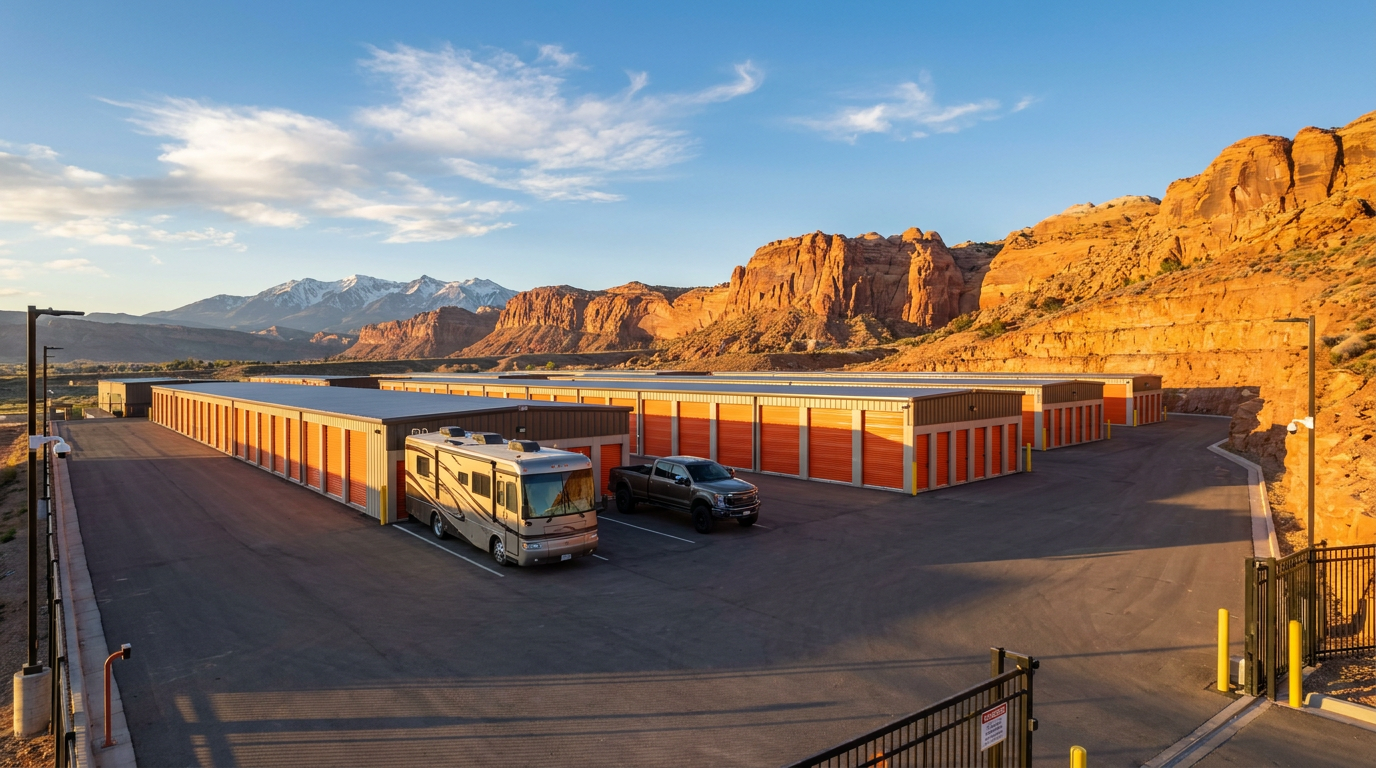
Drive-up units allow vehicle access directly to the unit door. The 12x22 option at $1,350 per month includes interior lighting and power, accommodating SUVs for easy loading of kayaks, SUPs, and oversized equipment. Pull a trailer directly to the door for efficient gear transfer.
The premium 19x35 drive-up unit at $2,500 per month features a motorized door and serves as a complete gear warehouse. Ski shops, bike rental companies, and vacation rental operators use this size for commercial inventory storage. Learn more about business storage solutions for commercial applications.
How to Store Skis and Snowboards Properly
Proper ski storage extends equipment life by 3 to 5 years and maintains performance characteristics. Follow these steps before placing skis in storage for the off-season.
Pre-Storage Preparation Checklist
Clean thoroughly: Remove all dirt, salt, and debris from bases, edges, and bindings. Use a damp cloth for bases and a soft brush for binding mechanisms. Allow 24 hours for complete drying before storage.
Apply storage wax: Hot wax the entire base surface with a universal temperature wax. Do not scrape the wax; leave it on as a protective barrier against oxidation. This process takes 15 to 20 minutes per pair and costs $15 to $25 if done professionally at a shop like Four Mountain Sports or Aspen Sports.
Loosen bindings: Release DIN settings to the lowest position to relieve spring tension. This prevents spring fatigue over 4 to 6 months of storage. Mark your DIN settings before adjusting.
Inspect edges: Apply a light coating of rust preventative to metal edges. Products like Rust Check or a thin layer of car wax create a moisture barrier. Focus on areas where edge meets base.
Boot Storage Requirements
Ski boots require specific storage conditions to maintain liner integrity and shell shape. Buckle boots loosely at the first or second notch to preserve buckle alignment without compressing liners. Store boots in a breathable bag, not sealed plastic, to prevent mold growth.
Custom footbeds and aftermarket liners from brands like Sidas, Superfeet, or Intuition should be removed and stored flat. Liners stored inside compressed boots develop permanent compression zones that reduce warmth and fit quality.
Bike Storage Best Practices for Colorado Conditions
Mountain bikes, road bikes, and e-bikes each require specific storage considerations. Colorado's low humidity generally benefits bike storage, but temperature swings between 10 and 90 degrees Fahrenheit stress components.
Standard Bike Preparation
Deep clean: Remove all mud, dust, and trail debris. Pay attention to pivot points, derailleur pulleys, and brake calipers. Use a bike-specific degreaser on the drivetrain and reapply chain lubricant after cleaning.
Tire pressure: Reduce tire pressure to 50 percent of riding pressure for storage exceeding 30 days. This prevents flat spots and reduces stress on tire beads. For tubeless setups, sealant remains effective for 3 to 4 months before requiring refresh.
Suspension service: If storing for more than 4 months, cycle suspension through full travel 10 to 15 times before storage. This redistributes lubricants within seals. Consider professional service if forks or shocks show signs of stiction.
E-Bike Battery Storage
Lithium-ion batteries from Bosch, Shimano STEPS, and Specialized require storage at 40 to 60 percent charge level. Full charge or complete discharge during storage accelerates cell degradation. Store batteries separately from the bike in a location maintaining 50 to 70 degrees Fahrenheit.
Check battery charge monthly during extended storage. If charge drops below 20 percent, recharge to 50 percent. Most e-bike batteries lose 1 to 2 percent charge per month in proper storage conditions. Interior storage units with power outlets enable convenient battery maintenance.
Seasonal Gear Rotation Strategy
Efficient storage management involves rotating gear between home and storage unit twice yearly. This system keeps current-season equipment accessible while protecting off-season gear.
Spring Rotation: April to May
After closing day at Aspen Mountain (typically mid-April), transition storage contents within 2 to 3 weeks. Move winter gear into storage: skis, snowboards, boots, winter jackets, ski pants, and cold-weather accessories. Retrieve summer gear: bikes, bike tools, camping equipment, water sports gear, and hiking packs.
This rotation takes 1 to 2 hours for a typical family. Drive-up units simplify the process by allowing vehicle loading directly at the unit. Schedule rotation for a weekday morning to avoid weekend traffic on Highway 82.
Fall Rotation: October to November
Before Thanksgiving opening weekend, reverse the process. Store bikes, camping gear, and summer equipment. Retrieve skis, snowboards, and winter clothing. Use this opportunity to inventory gear condition and identify items needing professional service before ski season.
Many Roaring Fork Valley residents maintain the same storage unit year-round, paying $135 to $925 monthly depending on size. This approach eliminates the hassle of finding new storage each season and ensures consistent access to both gear collections.
Security Features for High-Value Gear Protection
Gear theft represents a significant concern in resort communities. A 2024 survey by the National Self Storage Association found that 73 percent of customers rank security as their top facility selection criterion. Modern storage facilities address this through layered security systems.
Essential Security Elements
Digital video surveillance: 24/7 camera coverage of all access points, driveways, and unit corridors. Footage retention of 30 to 90 days provides evidence for any incidents. Look for facilities with visible camera presence as a deterrent.
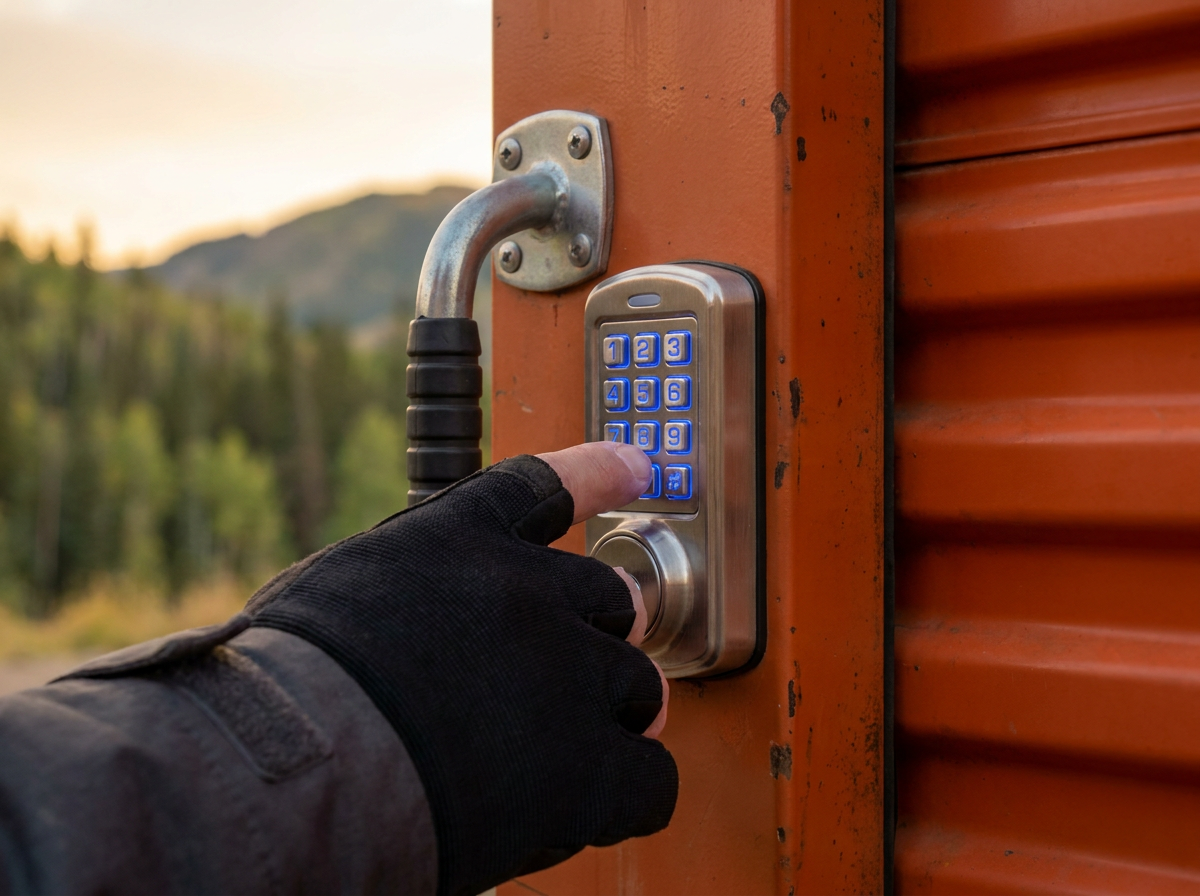
Access control: Individual gate codes and unit access tracking create an audit trail of all facility entry. Snowmass Self Storage provides personalized access codes that log entry times for each tenant.
LED lighting: Well-lit facilities deter criminal activity and improve safety during early morning or evening access. Full perimeter and corridor lighting should illuminate all areas without shadows.
Quality locks: Disc locks or cylinder locks provide superior protection compared to standard padlocks. Many facilities sell or rent high-security locks designed specifically for storage units.
Consider tenant protection plans for additional coverage beyond standard facility security. These plans typically cover theft, fire, water damage, and other risks at costs of $10 to $30 monthly depending on coverage limits.
Frequently Asked Questions
How much storage space do I need for skis and bikes near Aspen?
A single skier with 2 pairs of skis, boots, and a mountain bike needs 25 to 35 square feet (5x5 to 5x7 unit). A family of four with 8 pairs of skis, 4 bikes, and seasonal accessories requires 90 to 120 square feet (10x10 to 10x12 unit). Add 20 to 30 percent extra space for organization aisles and future gear additions.
Is it safe to store skis and bikes in a non-climate-controlled unit?
Interior units maintain more stable temperatures than drive-up units, reducing thermal stress on equipment. For gear valued over $5,000 or including carbon fiber components, interior storage provides better long-term protection. Standard drive-up units work well for aluminum bikes and recreational-grade ski equipment stored less than 12 months.
Can I store e-bikes and high-end carbon bikes in a storage unit?
Yes, with proper preparation. Remove e-bike batteries and store separately at 40 to 60 percent charge in a temperature-stable environment. Carbon frames tolerate storage conditions well but should be hung or supported to prevent stress on dropouts. Interior units with power outlets allow periodic battery charging during extended storage.
What is the best way to store skis in the off-season?
Clean skis thoroughly, apply storage wax without scraping, loosen bindings to relieve spring tension, and store vertically in a cool, dry location. Avoid storing skis flat with weight on top, which can affect camber. Check edges monthly and reapply rust preventative if oxidation appears.
How long can I rent a storage unit for seasonal gear?
Most facilities offer month-to-month leases with no long-term commitment required. Snowmass Self Storage requires no deposit and allows flexible rental periods. Many tenants maintain units year-round for convenience, while others rent only during specific seasons (4 to 6 months for off-season gear storage).
What is the difference between resort ski lockers and self storage?
Resort lockers provide 2 to 4 cubic feet of on-mountain storage during ski season operating hours. Self storage facilities offer 25 to 665 square feet of space with 24/7 year-round access for all gear types. Resort lockers cost $500 to $1,200 per season for limited capacity; self storage costs $135 to $925 monthly for significantly more space and flexibility.
Can I share a storage unit for skis and bikes with friends or family?
Yes, sharing is common and cost-effective. Establish clear organization zones within the unit, use labeled bins for each household, and share access codes responsibly. A 10x10 unit at $375 to $500 monthly split between two families costs $187 to $250 each, less than individual smaller units.
Do I need insurance for skis and bikes stored in a storage unit?
Homeowners and renters insurance policies often cover stored belongings, but verify coverage limits and exclusions with your provider. Storage facility tenant protection plans offer dedicated coverage for stored items at $10 to $30 monthly. For gear collections exceeding $10,000, consider specialized outdoor equipment insurance from providers like Markel or NSSIA.
Finding the Right Storage Solution in the Roaring Fork Valley
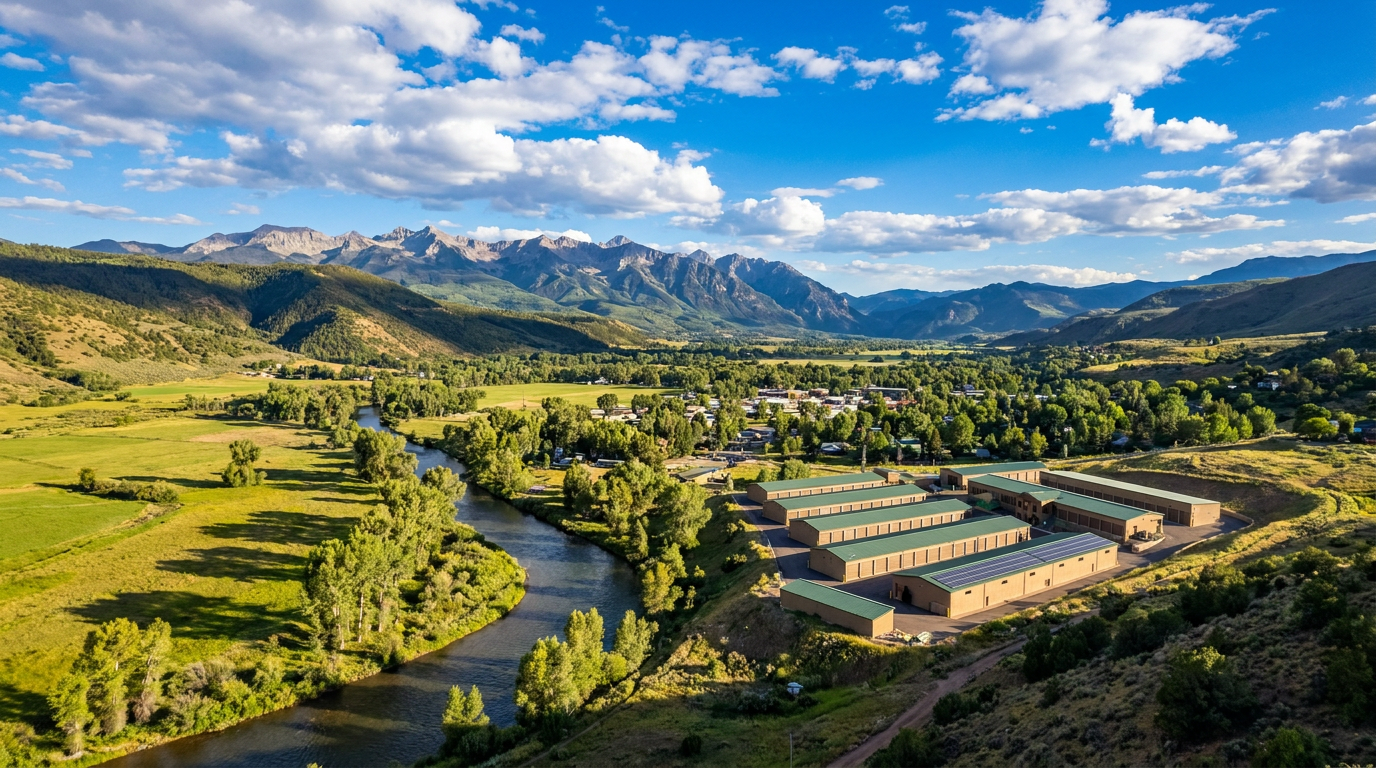
As reported by the Aspen Daily News, storage demand in the valley continues growing as outdoor recreation participation increases. Snowmass Self Storage, located at 26870 Highway 82 in Old Snowmass, serves the entire Roaring Fork Valley from Aspen to Glenwood Springs.
The facility offers unit sizes from 6x5 lockers at $135 monthly to 19x35 drive-up units at $2,500 monthly. All units include 24/7 access, digital video surveillance, and month-to-month leases with no deposit. Spanish-speaking staff assistance is available through Jimmy Bedoya.
You can reserve your storage unit online in 60 seconds with instant move-in confirmation. For questions about unit selection or gear storage recommendations, contact the Snowmass Self Storage team by phone at (970) 618-6301 or email at Help@LookingForStorage.com. The facility is open 7 days per week.
Explore strategies for affordable Aspen storage to maximize value while protecting your gear investment. With rates 15 to 30 percent lower than in-town Aspen facilities and convenient Highway 82 access just 10 minutes from Aspen Airport, Snowmass Self Storage provides practical year-round gear storage for the mountain lifestyle.
|