How to Store Winter Gear After Ski Season in Snowmass |
| HOW TO STORE WINTER GEAR AFTER SKI SEASON IN SNOWMASS
⏱ 14 min read ·
📄 #2,719 words
Learn the complete step-by-step process for storing skis, boots, and winter gear after ski season in Snowmass. Protect your investment with proper off-season care.
|
S tore winter gear after ski season by cleaning all equipment, applying storage wax to ski bases, loosening boot buckles, and placing everything in a cool, dry location with temperatures between 50 and 70 degrees Fahrenheit. Proper storage extends equipment life by 3 to 5 years and prevents the $500 to $2,000 replacement costs that result from rust, mold, and material degradation.
| Key Points: | |
|---|---|
| • | Apply a thick coat of storage wax to ski and snowboard bases; do not scrape it off until next season |
| • | Store boots with buckles loosened to 50% tension to preserve liner shape and prevent plastic warping |
| • | Maintain storage temperatures between 50 and 70 degrees Fahrenheit; avoid garages that exceed 90 degrees in summer |
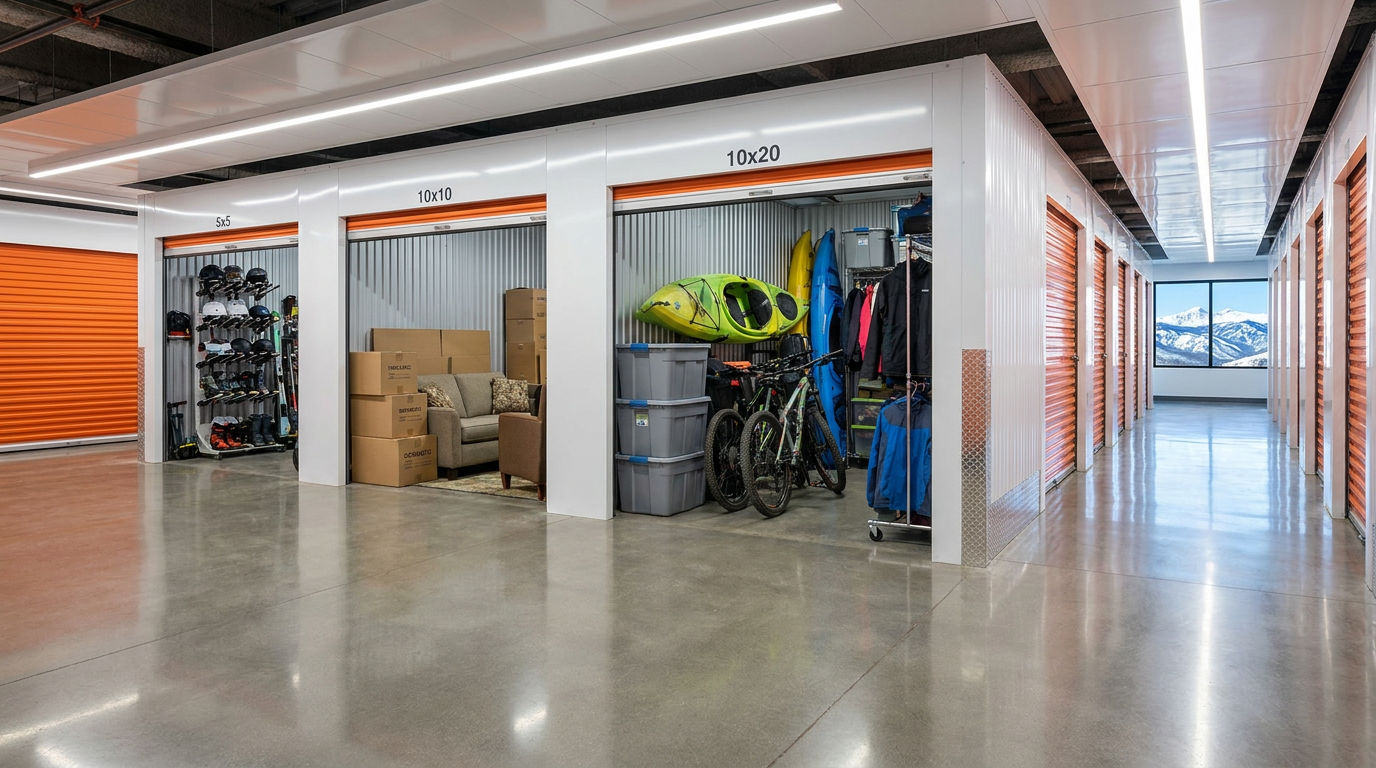
| • | A 5x5 or 6x5 storage unit ($135 per month in Snowmass) holds 2 to 3 complete ski setups plus accessories |
| • | Inspect bindings for DIN setting retention and have them professionally tested every 2 years per ASTM F1063 standards |
Why Snowmass Residents Need Dedicated Gear Storage
The Roaring Fork Valley presents unique storage challenges that differ from other ski regions. Summer temperatures in Aspen and Snowmass Village regularly reach 80 to 85 degrees Fahrenheit, while areas like Basalt and Carbondale can exceed 90 degrees in July and August. According to the REI gear care guide, heat exposure above 80 degrees causes ski boot liners to break down prematurely and can warp plastic shells.
Snowmass condos and vacation rentals typically lack adequate storage space for bulky winter equipment. A family of four accumulates 8 to 12 pairs of skis, poles, boots, helmets, and outerwear that consume 40 to 60 cubic feet of closet space. Many second homeowners and vacation rental managers in Snowmass Village need off-site solutions to free up living space during the summer tourism season.
Humidity fluctuations between seasons also threaten equipment. Spring snowmelt raises local humidity levels to 60 to 70 percent, while August drops to 20 to 30 percent. These swings cause metal edges to rust and leather components to crack without proper storage conditions.
Step by Step Plan to Store Ski Gear for the Off Season
Follow this 8-step process within 48 hours of your last ski day to prevent damage from residual moisture and debris. The complete process takes 2 to 3 hours for a full family setup.
Step 1: Clean All Equipment Thoroughly
Wipe down ski and snowboard bases with a damp cloth to remove salt, dirt, and road grime. Use a soft brush to clear debris from binding mechanisms. According to Nikwax's end of season guide, salt residue from Highway 82 and parking lot treatments corrodes metal edges within 2 to 3 weeks if left untreated.
Clean boot shells with mild soap and water, then dry completely for 24 to 48 hours. Remove liners and insoles, washing them separately according to manufacturer instructions. Most Intuition, Zipfit, and stock liners can be hand washed in lukewarm water with gentle detergent.
Step 2: Inspect for Damage
Check ski bases for gouges deeper than 2mm that require professional P-tex repair. Examine edges for burrs, rust spots, or separation from the base material. Look closely at binding heel and toe pieces for cracks, worn release mechanisms, or loose mounting screws.
Document any damage with photos before storing. Shops like Christy Sports in Snowmass Village offer summer tune specials at 20 to 30 percent below peak season rates, making this the ideal time for repairs.
Step 3: Apply Storage Wax
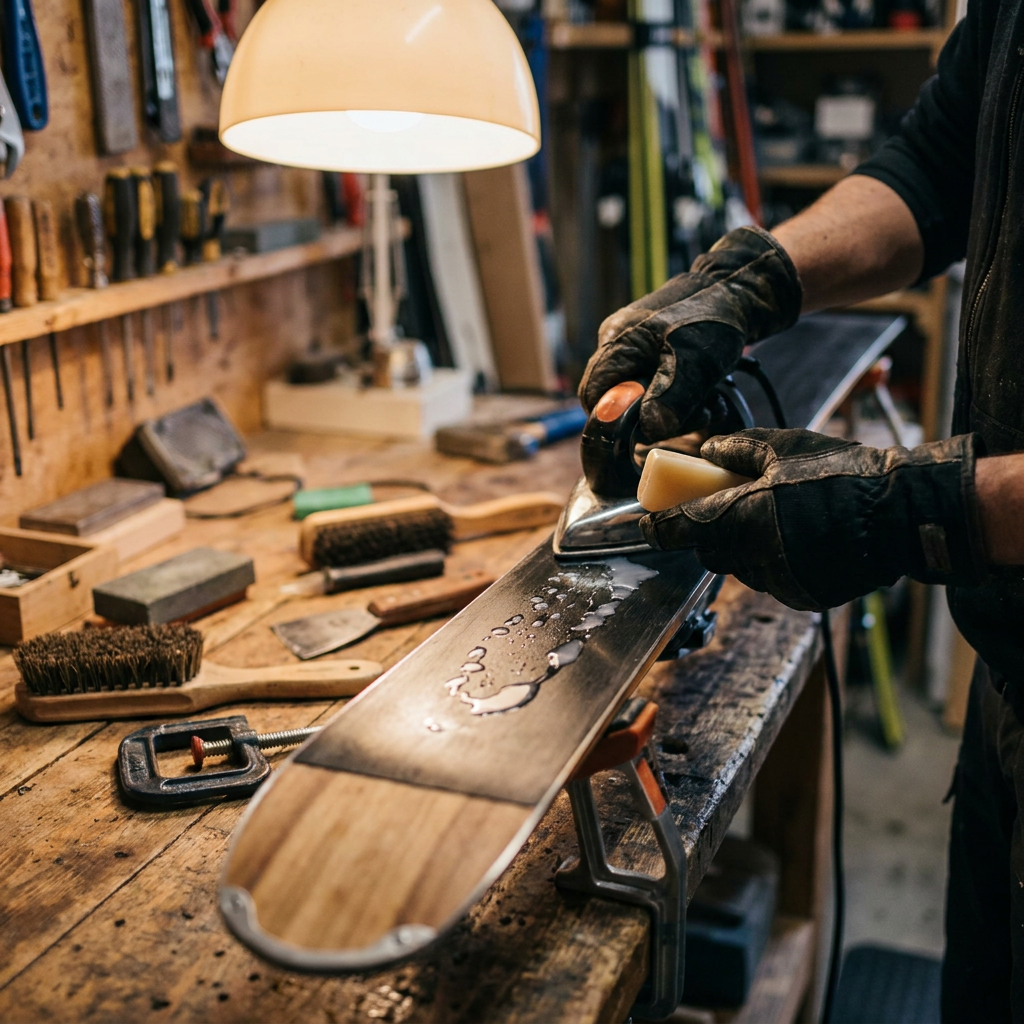
Hot wax application is the single most important step for protecting ski and snowboard bases during off-season storage. Apply a thick coat of all-temperature wax (such as Swix CH7, Toko All-in-One, or Demon Hyper X) and do not scrape it off. The wax layer prevents base oxidation and keeps the sintered polyethylene material hydrated.
If you lack waxing equipment, most Roaring Fork Valley ski shops charge $15 to $25 for a storage wax application. This investment protects bases valued at $300 to $800 from the chalky, dried-out condition that reduces glide performance by 15 to 25 percent.
Step 4: Release Binding Tension
Set DIN settings to the lowest position (typically 1 or 2) to release spring tension on heel and toe pieces. This prevents metal fatigue in the release mechanism springs. Mark your current DIN settings with tape or take a photo before adjusting; settings range from 3 to 14 depending on skier weight, ability, and boot sole length.
Step 5: Prepare Boots for Storage
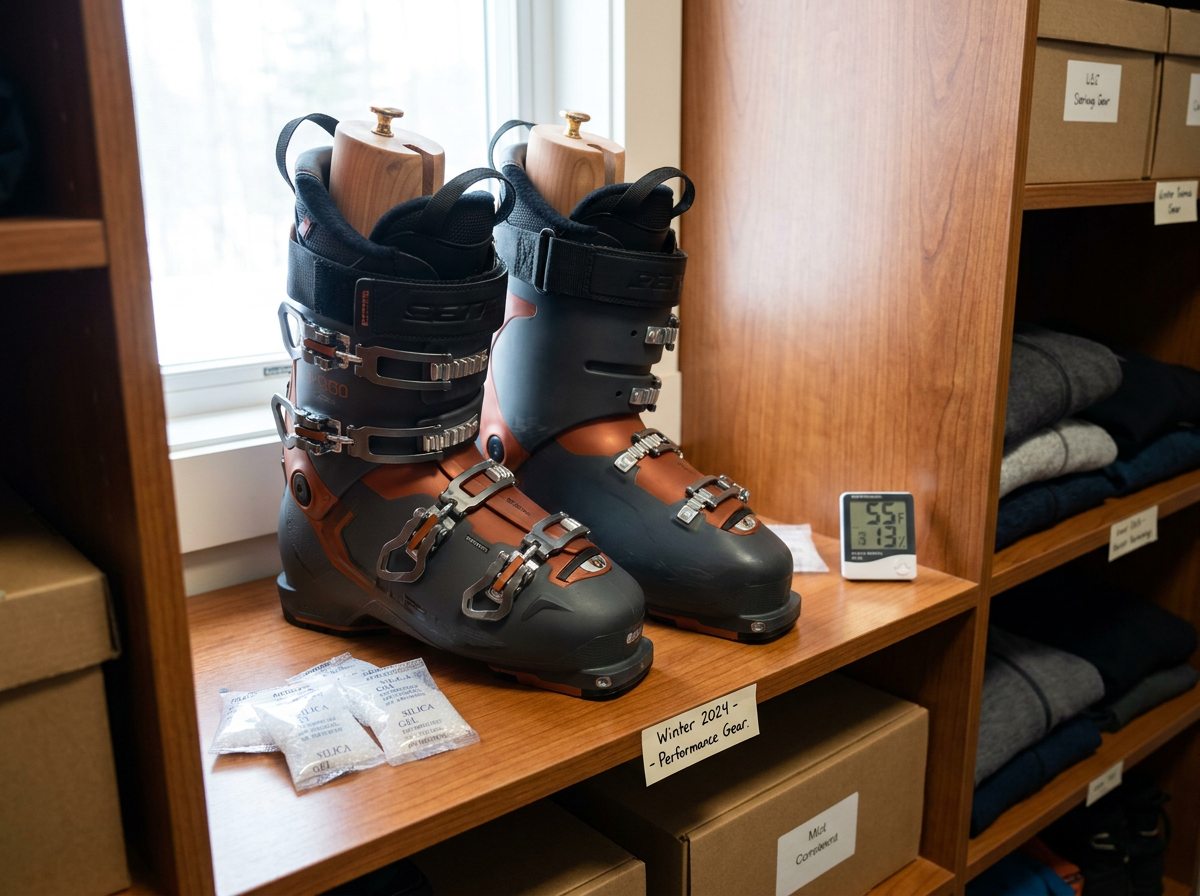
Buckle boots loosely at approximately 50 percent tension. Completely unbuckled boots allow shells to spread and deform, while fully buckled boots compress liners and stress plastic components. Insert boot trees or stuff with newspaper to maintain shape and absorb residual moisture.
Store boots upright, not stacked or lying flat. Place them in breathable boot bags rather than sealed plastic containers that trap moisture and promote mold growth.
Step 6: Organize Accessories
Wash all base layers, mid-layers, and socks before storing. Sweat residue attracts insects and causes fabric degradation. Hang or loosely fold technical outerwear; compression damages DWR (durable water repellent) coatings on Gore-Tex and similar membranes.
Store goggles in protective cases with lenses facing upward. Remove batteries from heated gloves, boot warmers, and avalanche beacons to prevent corrosion and leakage.
Step 7: Choose the Right Storage Location
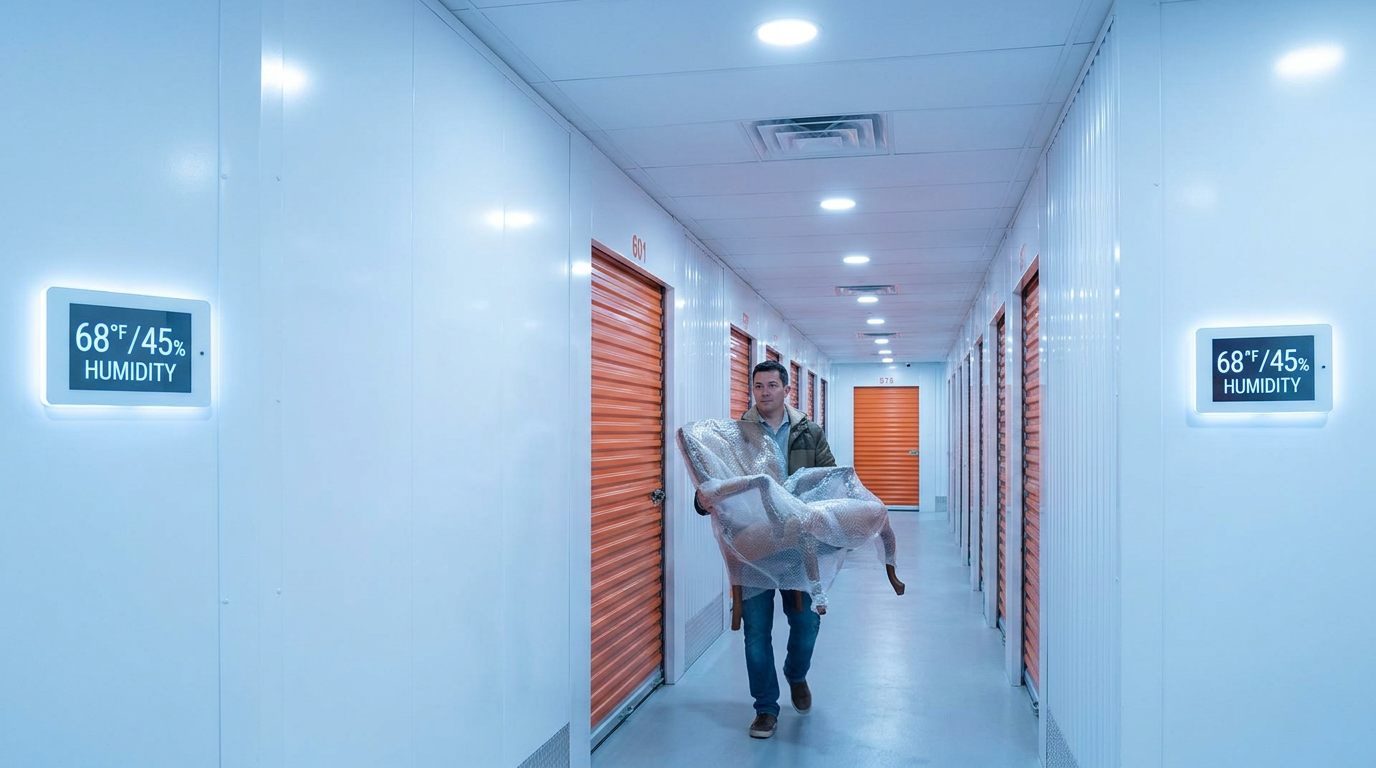
The ideal storage environment maintains temperatures between 50 and 70 degrees Fahrenheit with relative humidity between 30 and 50 percent. Avoid attics (which exceed 120 degrees in summer), uninsulated garages, and outdoor sheds. Never leave gear in vehicles, where temperatures can reach 140 degrees on sunny days.
For Snowmass residents without climate-appropriate home storage, a dedicated storage unit provides consistent conditions year-round. Interior units with lighting and power access allow you to check on gear and perform mid-summer maintenance.
Step 8: Create an Inventory System
Photograph all stored items and create a spreadsheet listing brand, model, size, and condition. This documentation proves invaluable for insurance claims and helps track equipment age. Most ski boots should be replaced every 150 to 200 ski days or 5 to 7 years due to plastic degradation, regardless of visible condition.
Storage Methods Comparison for Snowmass Gear
| Storage Option | Monthly Cost | Temperature Control | Best For |
|---|---|---|---|
| Home Closet | $0 | 65 to 75 degrees F | 1 to 2 person setups |
| Garage (insulated) | $0 | 40 to 90 degrees F | Skis only, not boots |
| 5x5 or 6x5 Storage Locker | $135 | 50 to 70 degrees F | 2 to 3 complete setups |
| 6x11 Interior Unit | $375 | 50 to 70 degrees F | Family of 4 plus summer gear |
| 6x15 Interior Unit | $495 | 50 to 70 degrees F | Multiple families or rental fleet |
Storage facilities along Highway 82, including options in Old Snowmass and Basalt, typically offer rates 15 to 30 percent lower than in-town Aspen locations while remaining within 10 to 15 minutes of Snowmass Village. Learn more about affordable storage options near Aspen to compare pricing across the valley.
How to Store Ski Boots in Off Season
Ski boots require more careful storage than skis due to their complex construction of plastic shells, foam liners, and metal hardware. Improper storage causes 60 to 70 percent of premature boot failures, according to bootfitter surveys conducted by Masterfit University.
Shell Preparation
Clean shells inside and out with a damp cloth and mild soap. Inspect the toe and heel lugs (the plastic ridges that contact bindings) for wear; lugs worn more than 2mm below factory height affect binding release and require replacement. Check sole length markings against your binding settings.
Apply a light coat of 303 Aerospace Protectant or similar UV-blocking treatment to shell exteriors. This prevents the plastic yellowing and brittleness that occurs from UV exposure, even in storage.
Liner Care
Remove liners completely and wash according to manufacturer guidelines. Most heat-moldable liners from Intuition, Palau, and similar brands can be hand-washed in lukewarm water with mild detergent. Air dry for 48 to 72 hours before reinserting into shells.
Custom footbeds and insoles should be removed, cleaned, and stored flat. Leaving them curved inside boots can cause permanent warping that affects fit and performance.
Buckle and Strap Settings
Close all buckles to approximately 50 percent tension. This maintains shell shape without compressing liners or stressing buckle mechanisms. Power straps should be fastened loosely. Store boots upright on a shelf or in a breathable boot bag; avoid sealed plastic bins that trap moisture.
The 80/20 Rule for Skiing and Gear Investment
The 80/20 rule in skiing states that 80 percent of your performance improvement comes from 20 percent of your equipment investment. Applied to gear storage, this means protecting your boots and skis (the 20 percent that matters most) yields 80 percent of the benefit.
A $600 pair of ski boots properly stored lasts 200 ski days over 6 to 8 years. The same boots stored in a hot garage may fail after 100 days or 3 to 4 years. At $3 to $6 per ski day for boot cost, proper storage saves $300 to $600 over the equipment lifecycle.
Similarly, skis stored with protective wax maintain base structure and edge sharpness. Skis stored dry develop oxidized, slow bases that require $50 to $100 in professional grinding to restore, assuming the damage is not permanent.
Specialized Storage for Snowmass Vacation Rental Owners
Vacation rental properties in Snowmass Village and Aspen face unique challenges during the off-season. Guest-use equipment, seasonal decor, and extra linens compete for limited closet space. Many property managers rotate winter and summer gear between units and storage facilities.
A 6x11 or 6x15 interior storage unit accommodates 4 to 6 complete ski setups, boot dryers, helmet racks, and seasonal decorations. Units with power access allow boot dryers and dehumidifiers to run during storage, maintaining optimal conditions. Explore business storage solutions designed for vacation rental operators and ski shops.
Rental fleet operators storing 20 or more pairs of skis benefit from larger drive-up units that allow vehicle access for loading and unloading. A 12x22 drive-up unit holds approximately 50 pairs of skis on wall-mounted racks plus associated boots and accessories.
Common Gear Storage Mistakes to Avoid
These errors cause the majority of off-season gear damage in the Roaring Fork Valley:
Storing wet equipment: Even slightly damp boots and gloves develop mold within 7 to 14 days. Always dry gear completely before storage. Use boot dryers, fans, or dehumidifiers if natural air drying is not possible.
Leaving gear in vehicles: Car interiors reach 140 degrees Fahrenheit on sunny summer days. A single day of heat exposure can permanently damage boot liners and delaminate ski cores.
Skipping storage wax: Unwaxed ski bases oxidize within 4 to 6 weeks, developing a chalky white appearance that indicates permanent damage to the sintered polyethylene structure.
Fully buckled boots: Boots stored with buckles fully closed compress liners by 15 to 20 percent over 6 months, resulting in a loose fit that reduces control and increases fatigue.
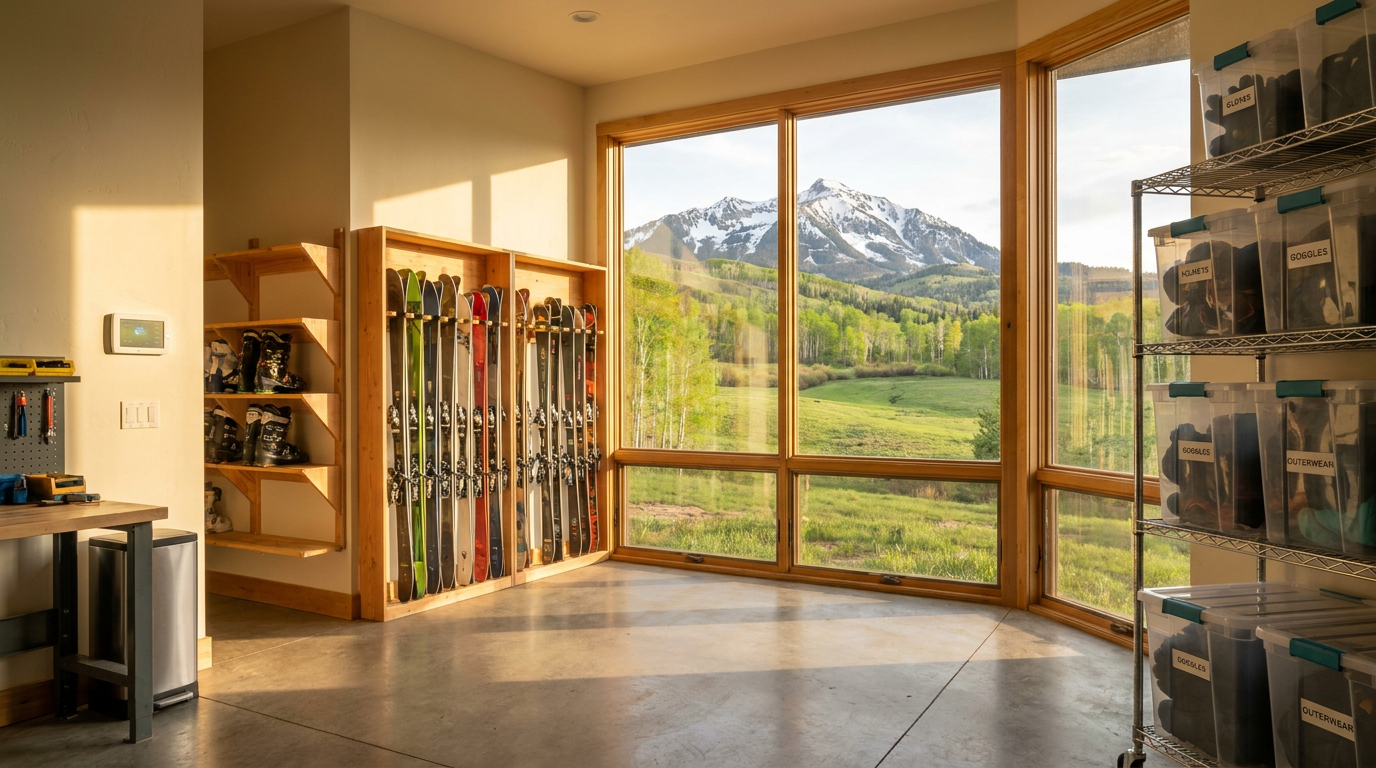
Stacking skis flat: Skis stored flat under heavy objects can develop permanent camber changes. Store skis vertically in racks or leaning against walls with bases together and tips apart.
Pre-Season Gear Preparation Checklist
Before the first snowfall at Snowmass (typically late October to early November), complete these steps to prepare stored gear:
Skis and snowboards: Scrape storage wax, brush bases, and apply fresh all-temperature wax. Check edge sharpness with a fingernail test; edges should scrape skin lightly without cutting. Have bindings professionally tested if more than 2 years old per ASTM F1063 standards.
Boots: Reinstall liners and insoles. Check buckle function and strap integrity. Wear boots around the house for 30 to 60 minutes to verify fit before the first ski day.
Outerwear: Wash and reapply DWR treatment using Nikwax TX.Direct or similar products. Test all zippers, vents, and closures. Replace worn pit zips or powder skirts.
Safety equipment: Replace avalanche beacon batteries. Test transceiver function with a partner. Inspect probe and shovel mechanisms for damage or corrosion.
Storage Solutions by Household Size
Match your storage needs to the right unit size using this guide based on typical Snowmass household configurations:
Single person or couple (2 to 4 ski setups): A 5x5 or 6x5 locker at $135 per month provides 25 to 30 square feet of floor space. Wall-mounted ski racks maximize vertical storage, leaving floor space for boots, bags, and accessories.
Family of 4 (6 to 8 ski setups plus kids' gear): A 6x11 unit at $375 per month offers 66 square feet. This accommodates multiple ski racks, a boot shelf, and bins for helmets, goggles, and gloves. Families with growing children storing multiple boot sizes benefit from the extra space.
Extended family or vacation property (10 or more setups): A 6x15 unit at $495 per month or 12x11 at $695 per month provides 90 to 132 square feet. These larger units accommodate guest equipment, seasonal furniture rotation, and summer gear like bikes and paddleboards.
Use our storage unit size guide to determine the exact dimensions needed for your equipment collection.
Protecting Your Investment with Proper Coverage
High-end ski equipment represents a significant investment. A family setup with performance skis, custom boots, and quality outerwear easily exceeds $5,000 to $10,000 in replacement value. Standard homeowner's or renter's insurance may not cover items stored off-premises.
Storage facilities offer tenant protection plans covering theft, fire, water damage, and other perils. These plans typically cost $15 to $30 per month for $5,000 to $10,000 in coverage, providing peace of mind for valuable gear stored away from home.
Document all stored items with photos, receipts, and serial numbers. This inventory simplifies claims processing and ensures accurate valuation in case of loss.
Local Resources for Gear Maintenance
The Roaring Fork Valley offers numerous options for professional gear service during the off-season:
Tune shops: Christy Sports locations in Snowmass Village and Aspen offer summer tune packages at reduced rates. Expect to pay $40 to $80 for a full tune including base grind, edge sharpening, and hot wax.
Bootfitters: Surefoot, Footloose, and other specialty shops offer summer appointments for shell modifications, liner replacements, and custom footbed adjustments. Summer wait times average 1 to 2 days versus 1 to 2 weeks during peak season.
Binding certification: Shops certified by Marker, Look, Salomon, and other manufacturers test binding release function against ASTM F1063 standards. This $25 to $40 service should be performed every 2 years or after any significant impact.
Frequently Asked Questions
How do you store ski gear long term?
Store ski gear long term by applying storage wax to bases, setting bindings to minimum DIN, loosening boot buckles to 50 percent, and placing everything in a temperature-controlled environment between 50 and 70 degrees Fahrenheit. Avoid garages, attics, and vehicles. A dedicated storage unit maintains consistent conditions for 6 to 8 months of off-season storage.
What temperature is too hot for ski boot storage?
Temperatures above 80 degrees Fahrenheit accelerate plastic degradation in ski boot shells. Temperatures exceeding 100 degrees cause permanent warping and liner breakdown. Summer garages in the Roaring Fork Valley regularly exceed these thresholds, making them unsuitable for boot storage.
Should I store skis with or without wax?
Always store skis with a thick coat of storage wax left unscraped on the bases. The wax layer prevents oxidation and keeps the base material hydrated. Scrape and apply fresh wax before the first ski day of the new season.
How much does gear storage cost in the Snowmass area?
Gear storage in the Snowmass and Aspen area costs $135 to $495 per month depending on unit size. Compact 5x5 lockers suitable for 2 to 3 ski setups start at $135 monthly. Facilities along Highway 82 in Old Snowmass and Basalt offer rates 15 to 30 percent below in-town Aspen locations.
Can I store skis and summer gear in the same unit?
Yes, many Snowmass residents rotate winter and summer gear in the same storage unit. A 6x11 or larger unit accommodates ski equipment from November through April and bikes, paddleboards, and camping gear from May through October. This approach maximizes storage value and keeps seasonal equipment organized.
Have additional questions about storing your winter gear? Check our storage FAQ or contact our team for personalized recommendations.
|